
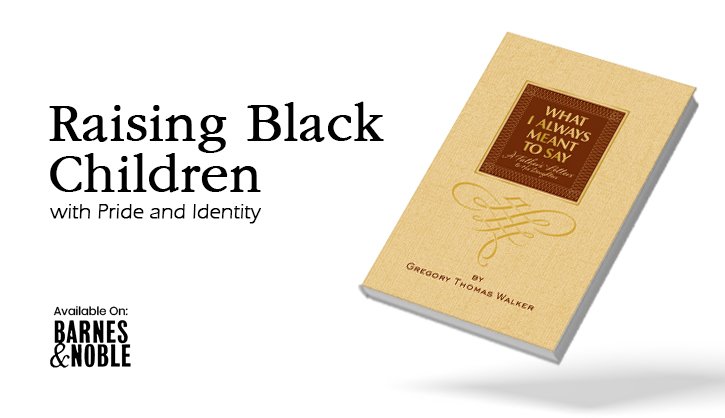
Many Black parents feel the pressure of raising children in a world that constantly challenges their identity. Without strong guidance, Black children grow up confused about who they are, where they come from, and what they stand for. Gregory Walker’s What I Always Meant to Say addresses this directly, offering a father’s honest letters on raising Black children with the pride, confidence, and cultural foundation they deserve. This book is one of the most powerful Black parenting books available today for families who want to give their children something lasting.
Why Raising Black Children Requires More Than Love Alone
Love is essential, but it is not enough on its own. Black children today are surrounded by media, pop culture, and social pressures that often distort their sense of identity and self worth. Without intentional guidance, they absorb definitions of Blackness that are shallow, harmful, or simply untrue.
Gregory Walker saw this clearly. His “Being Black” letter was written because he refused to let pop culture define his daughters. He wanted them to understand that Black identity is rooted in 400 years of struggle, triumph, creativity, and resilience, not in stereotypes or trending narratives. For more on how to open these conversations with your children, read our blog on How to Have Effective Communication with Kids About Sensitive Topics.
5 Important Lessons in Life for Raising Black Children with Confidence
Gregory’s letters give parents a real framework for having the conversations that truly matter. Each lesson below tackles a challenge Black families face and shows how his guidance provides the solution.
1. Teach Them Who They Are Before the World Does
Black children who do not know their history are vulnerable to accepting someone else’s version of it. Gregory’s letter teaches parents to give their children a strong cultural identity for Black children rooted in history, not shame or pop culture.
Start early. Tell them about the African Diaspora, the Civil Rights Movement, and the contributions Black people have made to art, music, science, and society. Teaching Black children about their culture begins at home, long before school or social media gets involved.
2. Separate Blackness from Stereotypes
One of the most important things Gregory addresses is the dangerous narrowing of Black identity in modern culture. His letter is direct: being Black does not mean fitting into a media-driven mold.
Black children can be articulate, well-educated, and professionally ambitious while being fully and proudly Black. His advice for daughters is clear: embrace the full, rich spectrum of what it means to be African American, not just what the media projects. For a deeper look at how Gregory guides daughters through identity, visit our blog on Practical Life Advice for Daughters: Building Self-Worth.
3. Build Their Confidence from the Inside Out
Helping Black children build confidence starts with how they see themselves, not how the world sees them. Gregory’s letters consistently reinforce one message: your worth is not defined by others’ opinions, achievements, or approval.
Parents who speak identity and worth into their children regularly create a foundation that holds even when the outside world pushes back. Raising Black daughters with pride means telling them, repeatedly and clearly, that they are enough exactly as they are.
4. Use Faith as an Anchor for Identity
Gregory’s faith letter and identity letter are deeply connected. For Black families, faith has historically been the anchor that held communities together through unimaginable hardship.
Teaching children that their identity is rooted in both cultural heritage and spiritual purpose gives them something unshakeable to stand on. Gregory’s guidance shows parents how to use faith not as a set of rules, but as a foundation for Black child identity and self worth that lasts a lifetime.
5. Have the Hard Conversations Early
Silence does not protect Black children. It leaves them unprepared. Gregory admits in his book that too many important conversations were left unsaid in his own household, and he wrote his letters to correct that.
Talk about race, about history, about what it means to compete and succeed in a world that is not always fair. Guiding children with love and respect means being honest, even when it is uncomfortable. For more on building this kind of trust with your child, read our blog on Parent-Child Relationship Help: Building Trust and Respect.
Best Black Parenting Books for Building Identity and Confidence
Finding the right resources for raising Black children with confidence can be challenging. Most parenting books offer generic advice that does not speak to the unique experiences Black families navigate every day. Gregory Walker’s What I Always Meant to Say stands apart because it is written from lived experience, a Black father’s honest, heartfelt letters to his daughters on identity, faith, culture, and self worth.
Among Black parenting books, this one is distinctive because it does not just tell children what to do. It models the conversations every Black parent needs to have, giving both parents and children a shared language for the important lessons in life that shape confident, grounded, and culturally proud individuals.
Where to Find This Book
What I Always Meant to Say is available on Barnes and Noble’s online store. It is the perfect gift for any Black parent ready to give their child the cultural foundation and confidence they truly deserve.
Final Thoughts
Raising Black children with pride and identity is one of the most important things a parent can do. Gregory Walker’s book gives families the words, the wisdom, and the courage to have conversations that shape confident, grounded, and culturally proud children.
Behind every lesson is a father who simply refused to leave the important things unsaid. That love and that honesty are what every Black child deserves to receive.
FAQs
Q1: How do I start teaching my Black child about their cultural identity?
A1: Start with honest conversations at home about history, heritage, and self worth. Gregory Walker’s letters offer a practical framework for raising Black children with pride and cultural confidence.
Q2: How does Gregory Walker address Black identity in his book?
A2: His “Being Black” letter teaches parents to give children a cultural identity rooted in history and pride, not stereotypes or pop culture.
Q3: What are the important lessons in life for raising confident Black children?
A3: Teaching cultural pride, separating identity from stereotypes, helping Black children build confidence, and having honest conversations early are the most important lessons Gregory shares.
Q4: Can this book help Black parents who struggle to talk about race with their kids?
A4: Absolutely. Gregory’s letters model how to guide children with love and respect while tackling difficult topics like race, identity, and cultural pride honestly and clearly.
Q5: Where can I buy this Black parenting book?
A5: Available on Barnes and Noble’s online store, easy to order as a personal copy or a meaningful gift for your family.