
Most parents avoid sensitive conversations with their kids, not because they don’t care, but because they don’t know where to begin. Talking about faith, money, race, sex, identity, or even unconditional love can feel overwhelming. The fear of saying the wrong thing often leads to saying nothing at all.
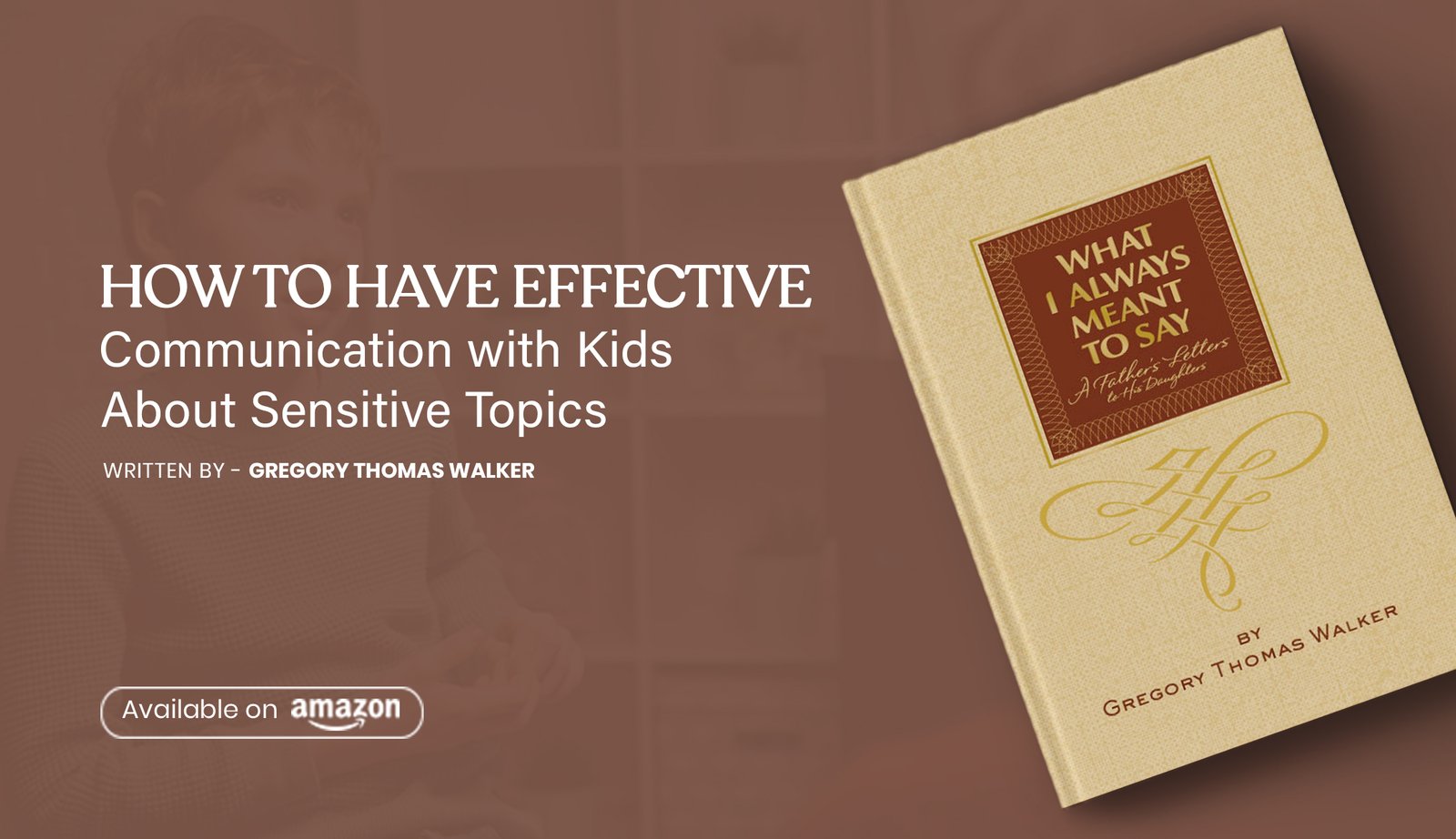
In What I Always Meant to Say: A Father’s Letters to His Daughters, Gregory Thomas Walker confronts this exact struggle. After years of fatherhood, he realized that too many important words had gone unspoken. His solution was simple but powerful: he wrote letters to his daughters.
Those letters became a framework for effective communication with kids, especially about sensitive topics that families often avoid. His approach shows that open communication with children does not require perfection; it requires honesty, intention, and courage.
Why Parent-Child Relationships Break Down
Many parent-child relationships weaken not because of conflict, but because of silence. Hard conversations are postponed. Emotional truths remain buried. Important guidance is assumed rather than spoken.
Gregory Walker openly admits that after 19 years of fatherhood, too many meaningful conversations were left unsaid. That silence made open communication with children far more difficult than it ever needed to be. When parents avoid sensitive topics, children often seek answers elsewhere: friends, media, or unreliable sources.
The breakdown happens gradually. A lack of family communication skills creates emotional distance. Kids may interpret silence as disinterest, judgment, or conditional love. Over time, trust erodes. Effective communication with kids is not just about sharing advice; it is about building a connection.
5 Sensitive Topics Gregory Walker Tackled, And How You Can Too
Gregory chose letters because face-to-face conversations sometimes felt too hard. Writing allowed him to gather his thoughts and speak from the heart without interruption or defensiveness. That honesty is what makes his method so powerful.
Each lesson below demonstrates how respectful communication with kids can turn difficult discussions into lifelong guidance. Parents do not need grand speeches; they need intentional, loving clarity.
1. Talking About Unconditional Love
Many children quietly question whether they are truly loved, especially after conflict, discipline, or disappointment. They may interpret correction as rejection or failure as proof they are not “good enough.”
Gregory’s first letter addresses this directly. He makes it clear that love is not something to be earned; it is constant and unwavering. This is foundational to building trust with children. When kids feel secure in unconditional love, they become more open, honest, and receptive to guidance.
Parents can practice effective communication with kids by consistently separating behavior from identity. Correct actions, but affirm worth. Apologize when necessary. Reassure them verbally and often. Love should never feel transactional. When children feel safe emotionally, sensitive topics become easier to discuss.
2. Having the Faith Conversation
Faith conversations often swing between avoidance and over-preaching. Many parents either fear imposing beliefs or push them without inviting dialogue. Gregory models a middle ground.
In his letters, he shares his faith openly while allowing space for questions. This approach reflects respectful communication with kids. Instead of dictating conclusions, he explains what he believes and why, creating room for his daughters to process their own thoughts.
Parents can encourage open communication with children about sensitive topics like faith by listening without immediate correction. Ask questions. Share personal experiences. Admit doubts when appropriate. Faith discussions should feel relational, not instructional.
3. Talking to Kids About Money
Money is one of the most avoided subjects in family life, yet it shapes independence and long-term stability. Many young adults leave home without basic financial literacy.
Gregory’s money letter simplifies the conversation: budget, save, live within your means. By breaking it down into practical steps, he demonstrates how talking to children about difficult issues like finances can be straightforward rather than intimidating.
Effective communication with kids about money should include transparency and modeling. Share lessons learned from mistakes. Teach delayed gratification. Encourage responsibility without shaming missteps.
4. Navigating the Love and Sex Talk
Few conversations make parents more uncomfortable than discussions about love and sex. Avoidance, however, often leaves children vulnerable to misinformation.
Gregory approaches this topic with honesty and emotional depth. Rather than relying on fear-based warnings, he emphasizes respect, commitment, and emotional connection. His method demonstrates open communication with children on sensitive topics rooted in dignity and care.
Parents can model effective communication with kids by focusing on values and consequences without embarrassment or judgment. Encourage questions. Clarify expectations. A calm, respectful tone makes all the difference. When children feel safe discussing relationships, they are less likely to seek guidance from harmful influences.
5. Discussing Race and Identity
Talking about race and identity can feel intimidating, particularly in today’s media-driven environment. Silence, however, leaves children unprepared to navigate complex social realities.
As an African American father, Gregory addresses this directly in his “Being Black” letter. He grounds identity in history, dignity, and personal responsibility rather than stereotypes or pop culture narratives.
This conversation highlights the importance of talking to children about difficult issues with clarity and pride. Parents can foster building trust with children by creating space for honest dialogue about cultural identity. Celebrate heritage. Discuss challenges realistically.
Practical Tips for Effective Communication with Kids
Do not wait for the “perfect” moment. It rarely arrives. Gregory’s approach shows that communication does not have to happen in dramatic sit-down talks. Letters, one-on-one outings, shared reading time, or even casual car conversations can open doors.
To strengthen family communication skills, consider these practical steps:
- Start small. Begin with manageable topics and build momentum.
- Listen more than you speak.
- Avoid immediate correction; seek understanding first.
- Share personal stories, including mistakes.
- Revisit topics over time rather than expecting one conversation to cover everything.
Effective communication with kids requires consistency. Repetition reinforces values. Vulnerability builds trust. And sincerity makes children feel respected rather than managed.
The goal is not flawless wording; it is a sustained connection.
Where to Find This Book
What I Always Meant to Say is available through the Barnes & Noble online store. It serves as a practical guide for parents who want to strengthen open communication with their children and address topics they may have long avoided. Whether purchased for personal reflection or as a gift, it provides a meaningful starting point for courageous conversations.
Final Thoughts
Gregory Thomas Walker’s heartfelt letters demonstrate that even long-delayed conversations can be redeemed. By choosing honesty over silence, parents can transform fear into connection.
Effective communication with kids does not require perfect phrasing or professional expertise. It requires courage, conviction, consistency, and sincerity.
The path to building trust with children begins with simply speaking and listening with love. When parents finally say what they always meant to say, they create a foundation of respect and openness that lasts a lifetime.
FAQs
Q1: How does this book help with effective communication with kids?
A1: It gives parents a real-world framework, through a father’s honest letters, for tackling sensitive topics with clarity, love, and confidence.
Q2: What sensitive topics does Gregory Walker cover?
A2: Faith, money, love and sex, race and identity, and unconditional love are the topics most parents struggle to bring up.
Q3: Is this book suitable for all families?
A3: Yes. While rooted in faith, Gregory’s family communication skills and life lessons apply to any parent wanting deeper, more honest conversations with their children.
Q4: Can this book help parents who struggle to open up emotionally?
A4: Absolutely. Gregory’s letters give parents a gentle framework to express what they have always felt but never knew how to say.
Q5: Where can I buy this book?
A5: It is available on Barnes & Noble’s online store and the author’s official website shop, making it easy to order as a personal copy or a meaningful gift.